GuideSpring: Turning a founder-built AI prototype into a validated placement platform
Mapping the real bed-search-to-admissions workflow behind a founder-built AI prototype, then redesigning it around how hospitals, social workers, and treatment centers actually coordinate care.
Category: HealthTech / Care Coordination
Status: Design complete, handed off (not shipped)
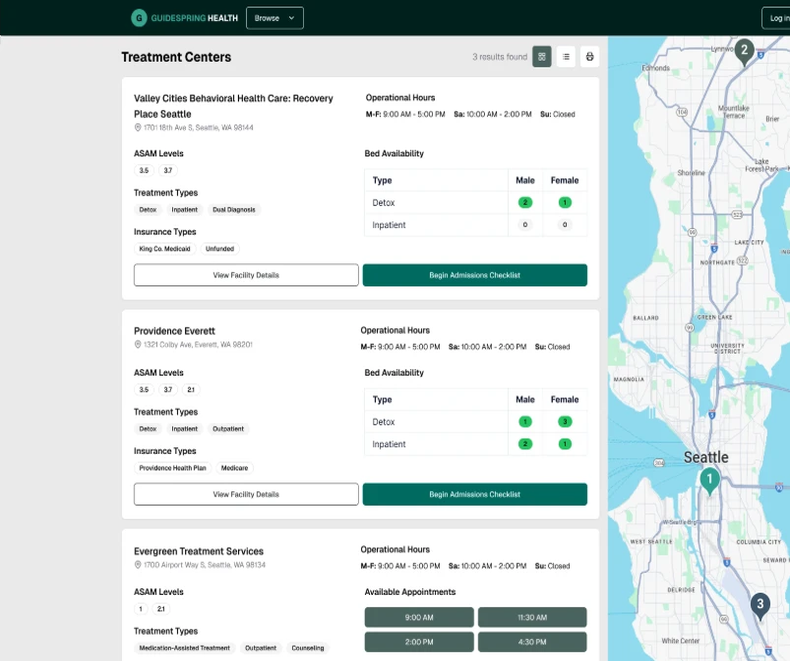
As a product designer at Rainwing, I led discovery and redesign for GuideSpring Health's treatment-placement platform, which connects hospitals and social workers searching for an open bed with behavioral health treatment centers that have one. The founders had built a working prototype themselves with v0, Vercel's AI UI-generation tool, adding screens as needs came up rather than from a shared model of who was using it — the result worked, but patterns for showing availability, labeling actions, and placing information didn't match from one screen to the next. Rather than work through the founders' feature requests as a checklist, I went back to Miro and FigJam to map the real users and the complete path a patient takes through the system: seeking treatment, consenting to share PHI, verifying insurance, searching real-time bed availability — a flow explicitly benchmarked against theZebra.com's insurance comparison-shopping pattern — reserving a bed, sharing labs for a virtual assessment, coordinating transport, and checking in at the facility. That mapping surfaced a reservation state machine the prototype hadn't accounted for: a bed hold with a 3-day expiration timer that automatically releases it back into availability if the treatment center doesn't act, the kind of operational detail that only shows up once you map a full lifecycle instead of designing one screen at a time.
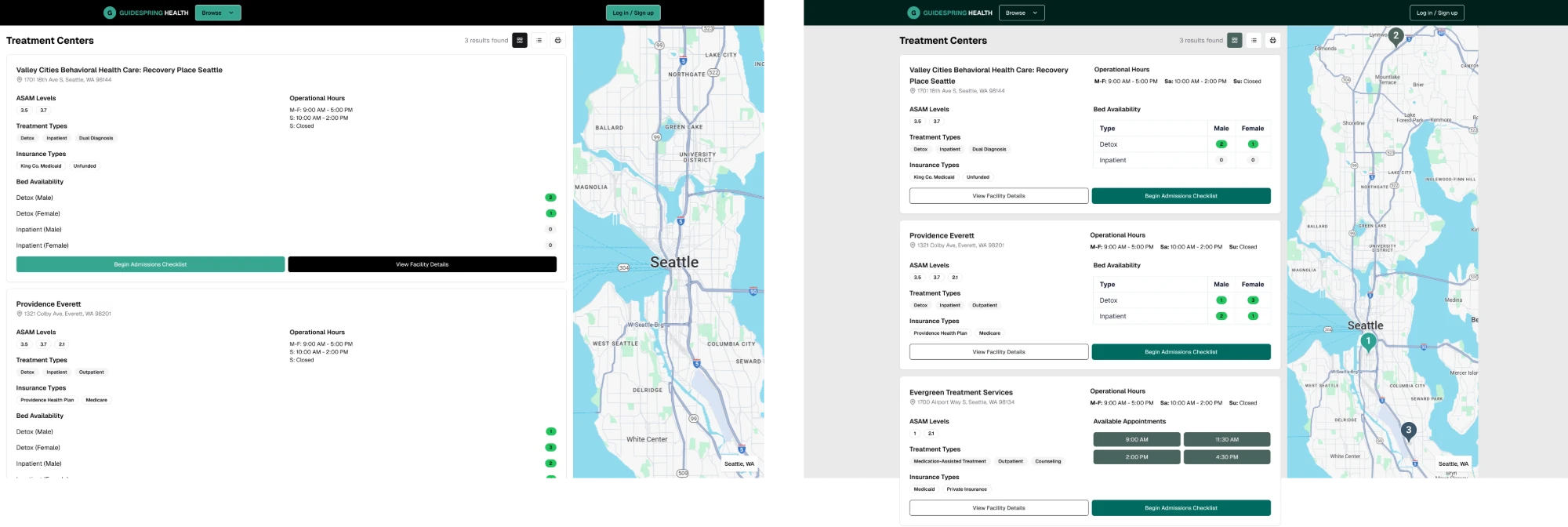
The redesigned results page reflects how facilities actually report capacity: a Male/Female breakdown by level of care, because that's how treatment centers themselves track and publish their own bed counts, not a framing imposed from outside, alongside a distinct state for facilities that take direct appointment bookings instead of holds. For admissions coordination, I replaced a workflow built on phone tag — social workers calling every two to four hours for a status update — with a tracked request system: each referral became a status-tracked ticket visible to both the hospital/social-worker side and the treatment-center side, showing next action, insurance verification, labs, consent forms, and admission decision at a glance. The platform didn't ship during the engagement. When the budget for Rainwing's services ran its course, the work concluded with a full handoff of research findings, the remapped user and flow model, the reservation-lifecycle spec, and high-fidelity designs for GuideSpring's internal team to carry forward.